

Across global education, many schools are seeing rising levels of stress and anxiety among students. Various academic pressures affect learners’ focus, participation and overall wellbeing – with a clear impact on performance in the classroom.
These challenges formed the starting point for Chinedu Vincent Okoro’s Action Research, supported by British Council Partner Schools. Based at Olumawu School in Abuja, Nigeria, Chinedu explored how mindfulness-based interventions – combining both digital and non-digital approaches – could help students manage stress, improve organisation and develop healthier learning habits.
Chinedu’s study is just one of our 12 Action Research initiatives from 2025 that focuses on school improvement on both a local and global scale. His research reflects a wider ambition within the Partner Schools network to turn insight into action and support evidence-based initiatives.
The need for mindfulness interventions in the global classroom
Olumawu School is a long-established, co-educational day and boarding school offering both the Nigerian and English national curricula. Like many international schools, it serves students navigating academic expectations from multiple systems while preparing for national and international examinations.
Chinedu’s research recognises that high stress levels among students are not limited to one country or context, however. They represent a global challenge, shaped by both shared pressures and local conditions.
As Chinedu explains:
‘From the research I undertook at my school, I noted that academic pressure, social challenges, and poor time management are among the most universal causes of anxiety, stress, and a lack of concentration among learners.’
He observed that family expectations around grades were a particularly strong stressor, even though learning itself was not the source of anxiety:
‘While there is nothing stressful in learning itself, every child experiences overwhelming pressure to stand up to parents’ and society’s expectations.’
At the same time, Chinedu noted that stress can be amplified by contextual factors such as access to resources, technology and learning support:
‘Though these conditions are quite generic in nature, the conditions that amplify them tend to vary. This is because differences in the availability of resources, as well as the environment and expectations, matter a great deal.’
This understanding shaped a research approach that aimed to be inclusive, flexible and relevant across contexts.
Mindfulness techniques for the classroom
Chinedu introduced a series of mindfulness-based workshops focused on time management, stress reduction and emotional regulation. These sessions combined practical strategies with opportunities for reflection and discussion.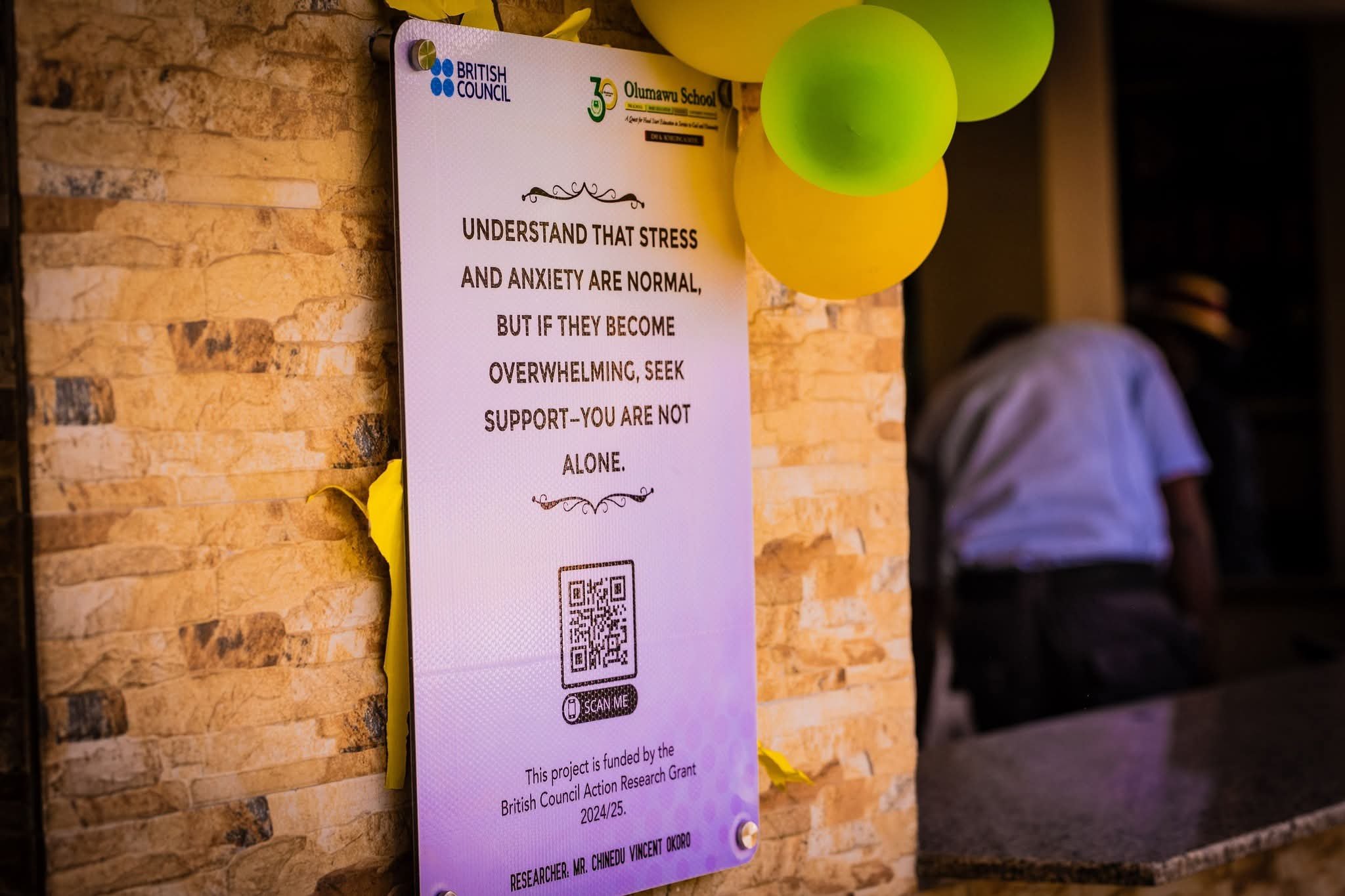
Students explored how to treat time as a resource, identify common time-wasters and prioritise tasks using SMART goals. They practised creating schedules and balancing academic and personal responsibilities using both physical planners and digital tools. The workshops also covered:
- breathing techniques;
- progressive muscle relaxation;
- gratitude journaling;
- yoga and positive affirmations;
- discussions about sleep, nutrition and hydration.
Digital tools played a key role, particularly for use outside school hours. Chinedu explained that access was initially a challenge due to school policies around smartphones:
‘Initially, some of the students seemed reluctant and very cautious about using technology, for instance, due to a lack of access to technology gadgets like smartphones in school, as indicated by the school policy.’
To address this, digital applications were introduced for home use through a practical guide shared with students. These included popular mindfulness and wellbeing apps they could easily use by themselves and fit into their schedules, which Chinedu covers in more detail in his Action Research report.
Over time, students responded positively:
‘Eventually, most learners became more interested in these applications as they appreciated the value they could create in terms of tracking mindfulness, stress, and focus.’
The implications of Chinedu’s research
The findings from the project show clear benefits. After the workshops, Chinedu found that:
- 94.4% of students reported feeling less stressed, more organised and better able to prioritise tasks.
- Almost 89% found the sessions helpful in managing academic stress.
- More than half reported increased confidence in managing their time.
Teachers and school leaders also observed positive behavioural changes, with 75% noting immediate improvements. All respondents highlighted the importance of whole-school support in creating a safe and effective environment for wellbeing initiatives.
At the same time, the research highlights limitations to be aware of. Some students continued to struggle with meeting deadlines, balancing school and personal life, or managing anxiety without individual support. As Chinedu notes, access to digital tools also remained uneven:
‘Inaccessibility was one of the aspects that acted as a barrier to applying the digital resources.’
These challenges reflect broader discussions across international education about equity, access and boundaries around mobile phones in schools.
These insights point to the need for sustained, long-term approaches that combine group interventions with personalised support.
.jpg?width=1032&height=688&name=A%20CROSS-SECTION%20OF%20THE%20PARTICIPANTS%20AT%20THE%20ACTION%20PLAN%20FOLLOW-UP%20WORKSHOP%20FOR%20SCHOOLS%20IN%20ABUJA%20(2).jpg)
Applying a blended approach to mindfulness
A key takeaway from Chinedu’s research is the value of combining digital and non-digital strategies for a blended approach. By offering digital tools for home use alongside physical mindfulness boards and in-school resources, schools can ensure that all learners have access to support, regardless of technology constraints. This approach allows flexibility while reinforcing consistent messages about wellbeing and self-regulation.
The improvements in engagement and organisation observed during the project also connect to wider conversations about how to motivate learners in demanding academic environments. They indicate a need to consider individual students and the unique learning context when developing mindfulness techniques.
Insights from a year of action research
Chinedu Vincent Okoro’s Action Research highlights how thoughtful, evidence-based interventions can make a meaningful difference to students’ wellbeing and learning. By combining mindfulness practices with appropriate use of technology, his work offers a practical framework that educators can adapt to their own contexts.
The findings also reinforce a broader message from British Council Partner Schools – that sustainable improvement comes from reflective practice, collaboration and a willingness to test and refine new approaches.
To explore Chinedu’s research in more detail, alongside insights from Partner Schools around the world, download our recently published 2025 Action Research report. And if you are interested in hearing from Chinedu directly and you are an existing British Council Partner School, log into the Online Support for Schools platform to re-watch the recordings from our recent Action Research Now! event.

Become a Partner School
If your school would like to offer UK international school qualifications through the British Council, apply to become a Partner School today.
Our team is ready to support you with tailored resources, professional development, and a network that spans across continents.